Source PTFE Corrugated Hose for Chemical, Electrical, and Automotive Uses
Explore 30 listings for PTFE corrugated hose suitable for chemical industry, electrical, and automotive applications. Buyers can compare specifications including temperature range, tensile strength, and customization options from suppliers in China.
Key considerations
Products List




Comprehensive Sourcing Guide
Strategic Sourcing Guide for PTFE Corrugated Hoses
Procuring high-performance PTFE corrugated hoses requires a disciplined approach that balances technical specifications with supply chain reliability. These components are critical in industries ranging from chemical processing to automotive engineering, where fluid transfer must remain leak-free under extreme conditions. The market offers a diverse array of options, but the buyer's primary challenge lies in distinguishing between generic listings and products that meet rigorous operational demands. This guide outlines the essential factors for sourcing PTFE corrugated hoses, focusing on verified attributes, material integrity, and supplier evaluation criteria based on current market data.
Technical Specifications and Material Integrity
The foundation of a successful procurement strategy begins with a precise understanding of the technical specifications. PTFE (Polytetrafluoroethylene) is the core material for these hoses, offering exceptional chemical resistance and a wide operating temperature range. Based on observed product data, the material properties are critical for defining the hose's capability. The tensile strength for PTFE-based corrugated hoses typically falls within the range of 30 to 40 MPa. This mechanical property ensures the hose can withstand internal pressure and external handling forces without structural failure.
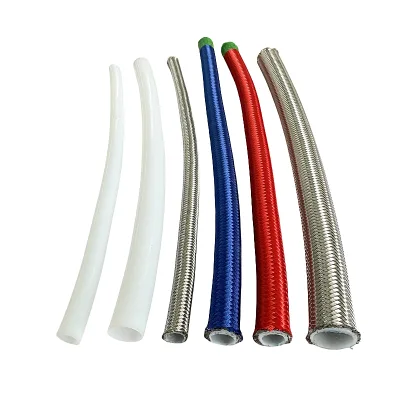
Temperature resistance is another paramount specification. The operational limits for these hoses are observed to span from -70ºC to 260ºC. This broad range allows for applications involving cryogenic fluids as well as high-temperature steam or hot oils. However, buyers must verify if specific models extend beyond these observed limits, as some specialized configurations may claim working temperatures up to +600ºC, though this requires strict validation against the specific product datasheet. The color of the hose is also a distinguishing feature, with common observations including Milky White, Translucent, Black, Blue, and Red. While color often serves as a visual identifier for different pressure ratings or chemical compatibilities, it should not be the sole determinant of performance.
The physical dimensions and standard sizing are equally vital. The market data indicates a variety of standard sizes available, including 1/4", 3/8", 1/2", 5/8", 5/16", 3/16", 1", 1-1/4", 1-1/2", and 2". These sizes correspond to specific industrial needs, from fine instrumentation lines to heavy-duty industrial transfer. The corrugated structure itself provides the necessary flexibility, allowing the hose to bend without kinking, a feature explicitly noted in product attributes. When evaluating a supplier, request detailed drawings that confirm the wall thickness and the specific geometry of the corrugation, as these directly influence the hose's pressure rating and flexibility.
Compliance, Standards, and Certification Verification
In the industrial sector, compliance with international standards is non-negotiable. While specific certifications like CE or EN 16643 may appear in general market descriptions, buyers must treat these as claims requiring verification rather than guaranteed facts. The sourcing process should prioritize suppliers who can provide documentation aligning with recognized standards such as ASTM, AISI, DIN, EN, GB, and JIS. These standards govern everything from material composition to manufacturing tolerances and pressure testing protocols.
For stainless steel components often used in the braiding or end fittings of PTFE hoses, the material grade is a critical compliance factor. Common classifications observed include SS304, SS316L, and SS321. The selection of the correct grade depends heavily on the corrosive nature of the fluid being transported and the environmental conditions. For instance, SS316L offers superior resistance to chlorides compared to SS304, making it essential for chemical industry applications. Buyers should explicitly request mill test certificates (MTC) for the stainless steel components to verify the chemical composition and mechanical properties.
Furthermore, quality management systems are a strong indicator of a supplier's reliability. An ISO 9001-2000 certification, or its modern equivalents, suggests a commitment to consistent quality control processes. However, the presence of a certificate alone is insufficient; the buyer must ensure the scope of the certification covers the specific manufacturing processes for corrugated hoses. Verification should also extend to the packaging standards, which often include requirements for neutral packing or specific customer-defined packaging to prevent damage during transit.
Cost Drivers and Pricing Dynamics
Understanding the cost structure of PTFE corrugated hoses is essential for budgeting and negotiation. The price range in the market is observed to be broad, spanning from $0.20 to $45.00 USD per unit. This significant variance is driven by several key factors, including the hose diameter, the length of the corrugation, the complexity of the end fittings, and the quantity ordered. Smaller diameter hoses with simple threaded ends will naturally fall at the lower end of the spectrum, while large-diameter hoses with flanged ends and specialized braiding will command higher prices.
Minimum Order Quantity (MOQ) is another critical cost driver. The observed MOQ range varies from 1 to 2000 units. Suppliers with lower MOQs may charge a premium per unit to cover setup and handling costs, whereas larger orders benefit from economies of scale. Buyers should assess their inventory needs carefully; ordering in bulk can significantly reduce the unit cost but increases storage requirements and capital tie-up. Additionally, customization options, such as specific lengths, unique fitting types, or special color coding, often incur additional charges. The "Customization: Available" attribute indicates that these modifications are possible, but the cost implications must be clarified during the RFQ (Request for Quotation) phase.
Lead times also impact the total cost of ownership. While some suppliers offer a standard delivery time of 10 days, others state that delivery is "According to The Order Quantity." Longer lead times may necessitate higher safety stock levels, indirectly increasing holding costs. Conversely, expedited shipping for urgent orders will add to the overall expense. Buyers should factor in these variables when comparing quotes from different suppliers to ensure a true cost comparison.
Typical Applications and Performance Requirements
PTFE corrugated hoses are engineered for demanding environments where standard piping would fail. The primary applications observed include the Chemical Industry, Electrical systems, Automotive sectors, and Petroleum Industry. In the chemical industry, the hoses are used for transferring aggressive acids, solvents, and bases, leveraging PTFE's inertness. The automotive sector utilizes these hoses for exhaust systems and fuel lines, where high temperatures and vibration resistance are required.
The working pressure is a critical performance metric. Data indicates a working pressure range of 0.6 to 2.5 MPa for general applications, with some high-performance models capable of withstanding up to 40 MPa. This wide range highlights the importance of matching the hose specification to the system's maximum operating pressure. The connection types, such as Thread or Flange End, must be compatible with the existing system infrastructure to ensure a secure seal.
Water absorption is another performance characteristic to consider, with observed values ranging from 0.1% to 0.3%. Low water absorption is crucial for maintaining the dielectric properties of the hose in electrical applications and preventing degradation in humid environments. The contraction percentage, observed between 2.0% and 5.0%, affects the hose's behavior under thermal cycling. Buyers must ensure that the hose's thermal expansion and contraction characteristics are compatible with the piping system to avoid stress on the fittings.
Supplier Evaluation and Geographic Considerations
Selecting the right supplier is as important as selecting the right product. The supply base for PTFE corrugated hoses is concentrated in specific regions of China, with Foshan, Zhejiang Hangzhou, and Zhejiang Yueqing being notable origins. These regions have established manufacturing ecosystems for plastic and metal products, offering a wide range of capabilities. However, the geographic location of the supplier can influence logistics costs and lead times.
When evaluating suppliers, buyers should look for a track record of providing "Customized: Yes" or "Customization: Available" services. This indicates flexibility in meeting specific project requirements. The packaging method is also a reflection of the supplier's attention to detail. Options range from Carton and Pallet to Wooden Case and Transperant Plastic Film. For high-value or sensitive components, a Wooden Case or specific customer requirements may be necessary to prevent damage.
The supplier's ability to provide accurate product models is another evaluation criterion. Specific model numbers like DF R14-02, DF R14-169, and FY-WT01 suggest a structured product line. Buyers should verify that the supplier can consistently supply these models and provide technical support for any deviations. Additionally, the "Product Name" field, such as "Flexible Wire Braided Corrugated PTFE Hose," should be matched precisely with the technical requirements to ensure the inclusion of necessary features like wire braiding for pressure reinforcement.
Quality Control and Long-Term Procurement Strategy
Quality control (QC) is the final gatekeeper in the procurement process. Buyers must implement a robust QC strategy that includes pre-shipment inspections and post-delivery testing. Key areas to inspect include the integrity of the PTFE lining, the tightness of the wire braiding, and the dimensional accuracy of the fittings. The "Feature: Bending/High Flexibility" attribute should be verified through physical testing to ensure the hose meets the required bend radius without kinking.
For long-term procurement, establishing a partnership with a reliable supplier is essential. This involves agreeing on clear specifications, consistent quality standards, and reliable delivery schedules. The "Delivery Time: According to The Order Quantity" attribute suggests that communication regarding order volume is key to managing expectations. Buyers should also consider the availability of spare parts and accessories, such as flanges and braiding, which are often required for maintenance and repairs.
In conclusion, sourcing PTFE corrugated hoses requires a meticulous approach that integrates technical verification, compliance checks, and strategic supplier selection. By focusing on the observed attributes such as tensile strength, temperature range, and material composition, buyers can mitigate risks and ensure the procurement of high-quality components. The broad price range and diverse applications underscore the need for a tailored sourcing strategy that aligns with specific project requirements. Through careful evaluation and continuous quality monitoring, organizations can secure a reliable supply chain for these critical industrial components.
FAQs
What is the operating temperature range for PTFE corrugated hoses?
The operating temperature range typically spans from -70ºC to 260ºC. Some specialized models may support higher limits up to +600ºC, but this requires strict validation against specific product datasheets before use.
Which materials are commonly used for these hoses?
PTFE is the core material, offering exceptional chemical resistance. Stainless steel grades like SS304, SS316L, and SS321 are often used for braiding or end fittings to ensure structural integrity under pressure.
Can I customize the hose specifications for my project?
Yes, customization is available for specific lengths, fitting types, and color coding. Buyers should clarify cost implications during the RFQ phase as modifications may incur additional charges beyond standard inventory.
What is the typical tensile strength of PTFE hoses?
The tensile strength for PTFE-based corrugated hoses typically falls within the range of 30 to 40 MPa. This mechanical property ensures the hose can withstand internal pressure and external handling forces without failure.
Which industries commonly use PTFE corrugated hoses?
These hoses are widely used in the chemical, automotive, electrical, and petroleum industries. They are essential for transferring aggressive fluids, managing exhaust systems, and ensuring leak-free fluid transfer under extreme conditions.
What are the standard connection types available?
Common connection types include Thread and Flange End options. These must be compatible with existing system infrastructure to ensure a secure seal and prevent leaks during operation in various industrial environments.
How does the working pressure vary across different models?
Working pressure ranges from 0.6 to 2.5 MPa for general applications. High-performance models can withstand up to 40 MPa, so matching the hose specification to the system's maximum operating pressure is critical.